
Category Archives: Invited Talk

Invited Speaker at BX2025

I had the opportunity to speak at the 2025 Behavioral Exchange Conference hosted by the Behavioral Insights Team (BIT) and the Behavioral Science Group at NYU Abu Dhabi. This year, the conference focused on New Frontiers in Behavioral Science, bringing to life the latest developments in the field and hearing from the people behind them.

In my talk, I explored how AI can allow us to solve the current problem of the lack of generalizability and specificity in behavioral science. I also participated in a panel on the power of social connections and community with Michael Bailey from Meta and Wardah Malik from BEworks.

My deepest thanks to the Behavioural Insights Team and the the Behavioral Science Group for hosting the event and inviting me!

Invited talk at Brunel University

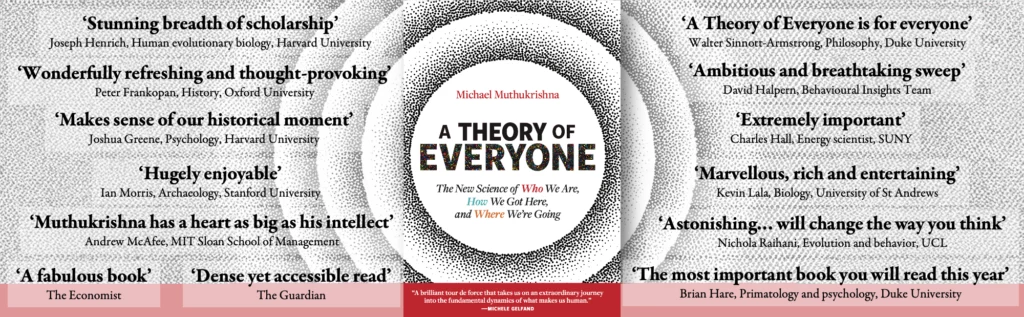
Earlier this month, I was invited to give a talk at Brunel University’s Centre for Culture and Evolution in London. In my talk, I discussed the cultural evolution of intelligence, including insights from my book A Theory of Everyone and from my previous work in these papers:

My thanks to the Centre for Culture and Evolution for inviting me and organizing the event!

Invited talk at Google

I was recently invited to give a talk at Google. During this talk I discussed cultural evolution and AI, as well as my work measuring and mapping scales of cultural and psychological distance.

More information about these topics can be found below:

  • White, C. J. M., Muthukrishna, M. (equal senior) & Norenzayan, A. (2021). Worldwide evidence of cultural similarity among co-religionists within and across countries using the World Values Survey. Proceedings of the National Academy of Sciences, 118 (37) e2109650118. [Download] [Supplementary] [Publisher] [Twitter]
  • Muthukrishna, M., Henrich, J. & Slingerland, E. (2021). Psychology as a Historical Science. Annual Review ofPsychology, 72, 717-49. [Download] [Publisher] [Summary Post] [Twitter]
  • Muthukrishna, M., Bell, A. V., Henrich, J., Curtin, C., Gedranovich, A., McInerney, J. & Thue, B. (2020). Beyond Western, Educated, Industrial, Rich, and Democratic (WEIRD) Psychology: Measuring and Mapping Scales of Cultural and Psychological Distance. Psychological Science, 31(6), 678-701. [Download] [Supplementary] [Code] [Summary Post] [Publisher] [Twitter]
  • Uchiyama, R., Spicer, R. & Muthukrishna, M. (2021). Cultural Evolution of Genetic Heritability. [Target article]. Behavioral and Brain Sciences, 1-147. [Download] [Summary Post] [Publisher] [Twitter]

My deepest thanks to Google for having me!

Invited speaker at the 2024 Wallace Wurth Lecture

Last month I was invited to speak at the 2024 Wallace Wurth Lecture at the University of New South Whales in Sydney, Australia. In conversation with UNSW Scientia Professor Rob Brooks, I discussed my book, A Theory of Everyone, and how cultural evolution and social learning shape everything from our daily decisions to the fate of entire civilizations.

Thank you to UNSW for having me!

Invited speaker at workshop on “An Aspirational Approach to Planetary Futures”

In April, I was invited to speak at a workshop on “An Aspirational Approach to Planetary Futures” by the United Nations Development Programme’s Human Development Report Office at the University of Oxford.

I presented work from my book A Theory of Everyone, and from the papers below:

  • Muthukrishna, M. (2019). Cultural Evolutionary Public Policy. Nature Human Behaviour, 4, 12-13. [Download] [Publisher]
  • Schimmelpfennig, R. & Muthukrishna, M.  (2023). Cultural Evolutionary Behavioural Science in Public Policy. Behavioural Public Policy. [Awarded EUSPR Presidential Award 2023] [Publisher] [Download] [Twitter] [LinkedIn]
  • Henrich, J. & Muthukrishna, M. (2021). The Origins and Psychology of Human Cooperation. Annual Review of Psychology, 72, 207-40. [Download] [Publisher] [Twitter]
  • Muthukrishna, M., Francois, P., Pourahmadi, S., & Henrich, J. (2017). Corrupting Cooperation and How Anti-Corruption Strategies May Backfire. Nature Human Behaviour, 1(0138). [Download] [Summary Post] [Publisher]

My deepest thanks to the University of Oxford for having me!


Invited speaker at Creativity: Innovation, Transmission and Motivation in Animals, Humans and Societies Meeting, Pontifical University of the Holy Cross, Rome, Vatican

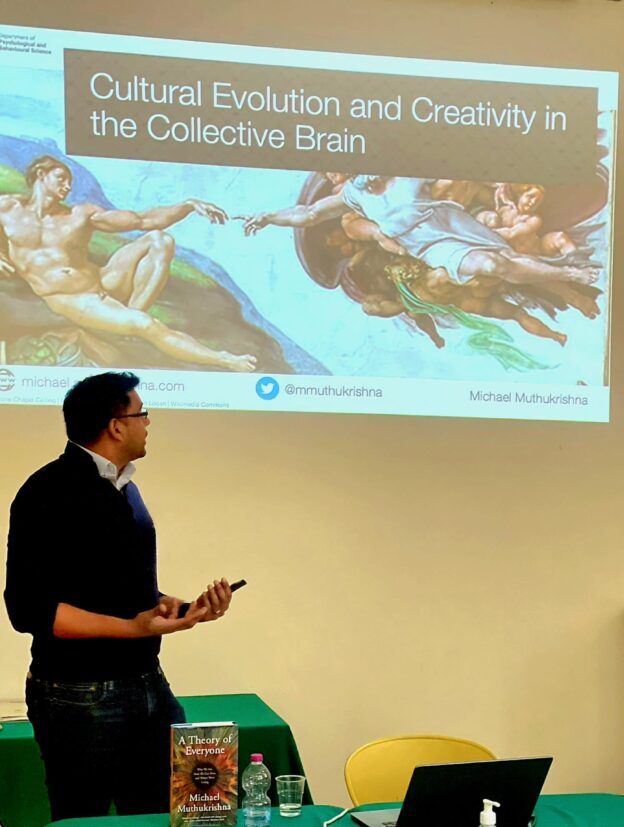
I was delighted to be an invited speaker at the meeting on “Creativity: innovation, transmission, and motivation in animals, humans, and societies,” which took place at the Pontifical University of the Holy Cross in Rome. The meeting is part of an effort to strengthen the relationship between the Vatican and science.

I presented my research on “Cultural Evolution and Creativity in the Collective Brain”, including new work, my book, A Theory of Everyone, and previous work in these papers:

This event brought together an interdisciplinary array of scholars, priests, and researchers, and I am looking forward to continuing this important dialogue.

Panelist and Invited Speaker on Bridging Disciplines to Advance Governance Research at the Governance Initiative, Abdul Latif Jameel Poverty Action Lab, London

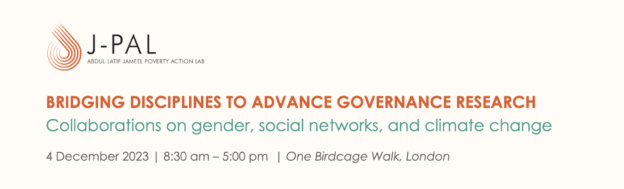
I recently participated as a panelist and invited speaker at the Governance Initiative organized by the Abdul Latif Jameel Poverty Action Lab in London, UK, at their conference on “Bridging Disciplines to Advance Governance Research: Collaborations on Gender, Social Networks, and Climate Change.”

I was a panelist on the “Perspectives on The Challenges and Importance of Multidisciplinary Collaboration in Governance Research,” alongside Nava Ashraf and Noam Yuchtman. This engagement provided a forum to discuss innovative strategies for governance and poverty alleviation, leveraging insights from cultural evolution and economic psychology to inform policy and action.

I tackle more of this in my book, “A Theory of Everyone,” and other relevant papers on the topic can be found here:

  • Schimmelpfennig, R. & Muthukrishna, M.  (2023). Cultural Evolutionary Behavioural Science in Public Policy. Behavioural Public Policy. [Awarded EUSPR Presidential Award 2023] [Publisher] [Download] [Twitter] [LinkedIn]
  • Muthukrishna, M., Bell, A. V., Henrich, J., Curtin, C., Gedranovich, A., McInerney, J. & Thue, B. (2020). Beyond Western, Educated, Industrial, Rich, and Democratic (WEIRD) Psychology: Measuring and Mapping Scales of Cultural and Psychological Distance. Psychological Science, 31(6), 678-701. [Download] [Supplementary] [Code] [Summary Post] [Publisher] [Twitter]

My thanks to the Abdul Latif Jameel Poverty Action Lab for organizing the event, and my co-panelists, Nava Ashraf and Noam Yuchtman for an engaging session.

Keynote speaker at Risk Management Symposium 2023, Saïd Business School, Oxford

Last week, I was honored to serve as the keynote speaker at the Risk Management Symposium 2023, held at Saïd Business School, Oxford.

The event gathered experts to explore advancements in risk management, and my presentation delved into how cultural evolution and economic psychology inform risk management practices in today’s complex world. I focused on my research on overconfidence, diversity, and innovation.

I also tackle these concepts in my book, “A Theory of Everyone” which you can check out here.

Many thanks to Tim Jenkinson, John Renkema and Saïd Business School for organising and hosting the event.

Invited speaker at University of Michigan

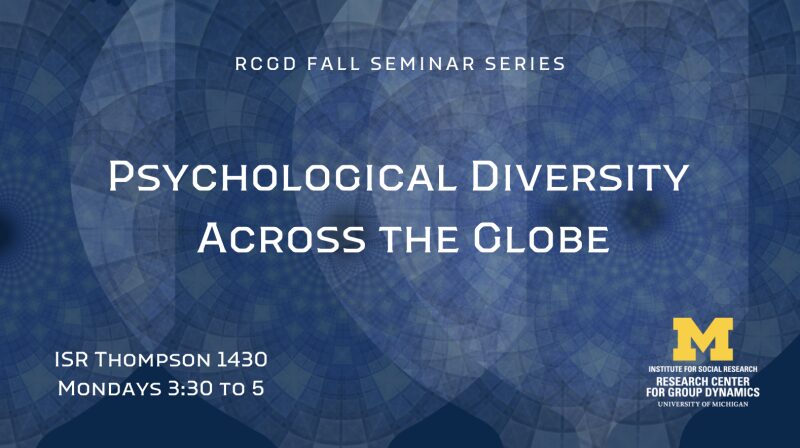
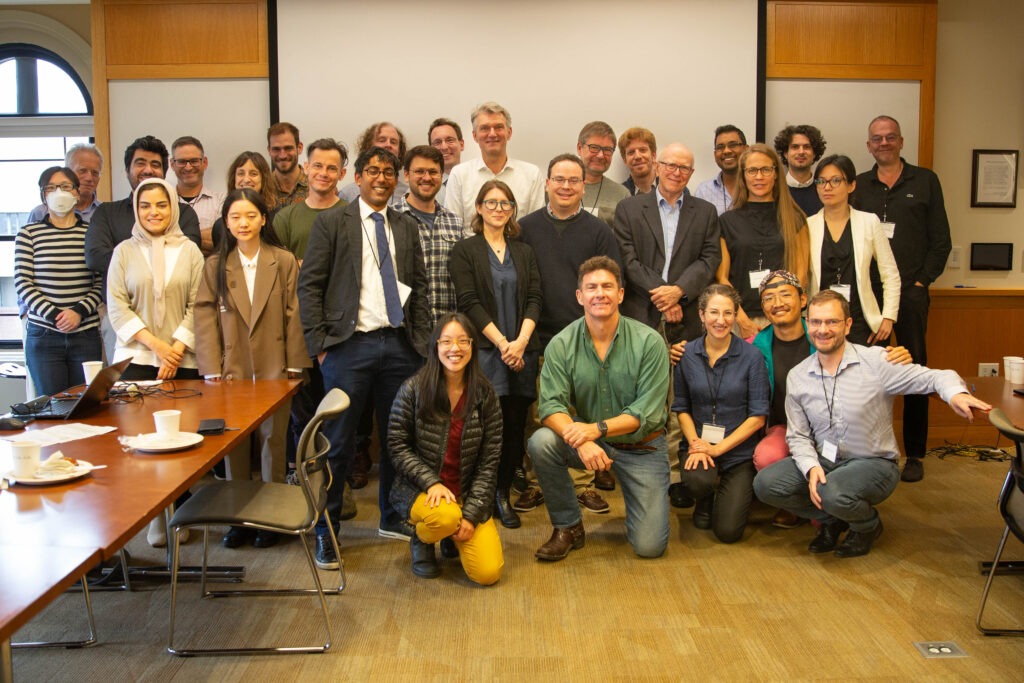
I was invited to speak at the University of Michigan‘s RCGD Fall Seminar Series, co-sponsored by the Institute for Social Research and Department of Psychology. I presented my book, A Theory of Everyone, focusing on the theory, historical psychology, and cross-cultural differences in cognition.

My thanks to Shinobu Kitayama for inviting me and to University of Michigan for organizing the event.

Invited Speaker at the Kinship, Historical Psychology and European Medieval Development Workshop, Harvard University

I was invited to a workshop at Harvard on “Kinship, Historical Psychology and European Medieval Development“. I presented on the “Database of Religious History,” and its use in historical psychology.

More about the workshop and projects can be found on the Historical Psychology Project website. This paper launched the field:

Muthukrishna, M., Henrich, J. & Slingerland, E. (2021). Psychology as a Historical Science. Annual Review ofPsychology, 72, 717-49. [Download] [Publisher] [Summary Post] [Twitter]

My thanks to Jonathan Schulz and Joe Henrich for organizing the workshop.

Invited Speaker at WEIRD Conference, University of Minnesota Law School, University of Minnesota.

The University of Minnesota Law School hosted a WEIRD Conference. Joe Henrich opened the conference with a discussion of his book (which the conference was built around) and I ended the conference with a talk on my book, A Theory of Everyone. It was a US soft launch for the book – the official launch was at LSE and you can watch the video below:

My thanks to Claire Hill for organizing the event and inviting me to talk about A Theory of Everyone.

Invited speaker at Emotion in History: Boundary Crossing Adventures Workshop, University of California, Santa Barbara, CA.

I gave a talk at the “Emotions in History: Boundary-Crossing Adventures” workshop, hosted by the University of California, Santa Barbara (UCSB). This symposium brought together experts from the fields of psychology and history to explore the interplay between emotional theories across these disciplines.

The talk also included a wonderful roundtable discussion.

For those interested, you can watch the recordings of this event, accessible here. My deepest thanks to UCSB and the organizers, Hongbo Yu and Ya Zuo.

The Evolution of Comity: Ultimate Constraints on the Scale of Cooperation at the School of Collective Intelligence, Mohammed VI Polytechnic University

I gave an invited talk at the School of Collective Intelligence at Mohammed VI Polytechnic University in Morocco on the dynamics of collective intelligence within communities and its significance in driving innovation and addressing complex problems.

  • Muthukrishna, M. (2023). [BOOK] A Theory of Everyone: Who we are, how we got here, and where we’re going. MIT Press (US & Canada) / Basic Books (UK and Commonwealth) [Amazon and Local Bookstores]
  • Schnell, E., Schimmelpfennig, R., & Muthukrishna, M. (2023). The Size of the Stag Determines the Level of Cooperation. bioRxiv
  • Muthukrishna, M., Henrich, J. & Slingerland, E. (2021). Psychology as a Historical Science. Annual Review of Psychology, 72, 717-49. [Download] [Publisher] [Twitter]
  • Henrich, J. & Muthukrishna, M. (2021). The Origins and Psychology of Human Cooperation. Annual Review of Psychology, 72, 207-40. [Download] [Publisher] [Twitter]

The title of my talk was “The Evolution of Comity: Ultimate Constraints on the Scale of Cooperation.” Key publications relevant to this discussion are:

The research is related to my book, and a grant focused on expanding our comprehension of the foundational processes facilitating cooperation, with the goal of enhancing social harmony and unity. I am grateful to the faculty, students and staff at Mohammed VI Polytechnic University for the invitation and their hospitality.

The Evolution of Comity: Ultimate Constraints on the Scale of Cooperation at the Department of Psychology, University of Amsterdam

I was invited to speak at the this month, where I discussed my research on the conditional nature of human cooperation and its potential threats to our progress and advancement.

I presented “The Evolution of Comity: Ultimate Constraints on the Scale of Cooperation” at University of Amsterdam‘s Faculty of Social and Behavioural Science. The most relevant papers are:

  1. Muthukrishna, M., Henrich, J. & Slingerland, E. (2021). Psychology as a Historical Science. Annual Review of Psychology, 72, 717-49. [Download] [Publisher] [Twitter]
  2. Henrich, J. & Muthukrishna, M. (2021). The Origins and Psychology of Human Cooperation. Annual Review of Psychology, 72, 207-40. [Download] [Publisher] [Twitter]

The research is also related to my forthcoming book and to a new grant, which aims to deepen our understanding of the underlying mechanisms that enable cooperation and how they can be leveraged to foster greater harmony and unity in our interconnected world.

What makes us smart? at The University of Queensland’s School of Economics

December 17, 2022

I spoke at the University of Queensland‘s School of Economics about the factors that contribute to human intelligence. The talk was a broad sweep of my work on intelligence and human evolution, including work in progress. A lot of this work is covered in my forthcoming book, A Theory of Everyone.

Some of the key papers discussed include:

  1. Schimmelpfennig, R. & Muthukrishna, M.  (2023). Cultural Evolutionary Behavioural Science in Public Policy. Behavioural Public Policy. [Publisher] [Download] [Twitter] [LinkedIn]
  2. Muthukrishna, M., Bell, A. V., Henrich, J., Curtin, C., Gedranovich, A., McInerney, J. & Thue, B. (2020). Beyond Western, Educated, Industrial, Rich, and Democratic (WEIRD) Psychology: Measuring and Mapping Scales of Cultural and Psychological Distance. Psychological Science, 31(6), 678-701. [Download] [Supplementary] [Code] [Summary Post] [Publisher] [Twitter]
  3. Henrich, J. & Muthukrishna, M. (2021). The Origins and Psychology of Human Cooperation. Annual Review of Psychology, 72, 207-40. [Download] [Publisher] [Twitter]
  4. Muthukrishna, M., Henrich, J. & Slingerland, E. (2021). Psychology as a Historical Science. Annual Review of Psychology, 72, 717-49. [Download] [Publisher] [Twitter]
  5. Muthukrishna, M., Francois, P., Pourahmadi, S., & Henrich, J. (2017). Corrupting Cooperation and How Anti-Corruption Strategies May Backfire. Nature Human Behaviour, 1(0138). [Download] [Summary Post] [Publisher]
  6. Muthukrishna, M., Doebeli, M., Chudek, M., & Henrich, J. (2018). The Cultural Brain Hypothesis: How culture drives brain expansion, sociality, and life history. PLOS Computational Biology, 14(11): e1006504. [Download] [Supplementary] [Summary Post] [Publisher] [Twitter]
  7. Muthukrishna, M. & Henrich, J. (2016). Innovation in the Collective Brain. Philosophical Transactions of the Royal Society B: Biological Sciences, 371(1690).  [Telegraph] [Scientific American] [Video] [Evonomics] [LSE Business Review] [Summary Post] [Download] [Data] [Publisher]
  8. Schimmelpfennig, R., Razek, L., Schnell, E., & Muthukrishna, M. (2021). Paradox of Diversity in the Collective Brain. Philosophical Transactions of the Royal Society B: Biological Sciences. [Download] [Summary Post] [Publisher] [Twitter]
  9. Uchiyama, R., Spicer, R. & Muthukrishna, M. (2021). Cultural Evolution of Genetic Heritability. [Target article]. Behavioral and Brain Sciences, 1-147. [Download] [Summary Post] [Publisher] [Twitter]

The Evolution of Comity: Ultimate Constraints on the Scale of Cooperation at the Department of Economics, George Mason University

October 5, 2022

I was invited to speak at George Mason University‘s Economics Department. I presented “The Evolution of Comity: Ultimate Constraints on the Scale of Cooperation” at Duke University. The most relevant papers are:

  1. Muthukrishna, M., Henrich, J. & Slingerland, E. (2021). Psychology as a Historical Science. Annual Review of Psychology, 72, 717-49. [Download] [Publisher] [Twitter]
  2. Henrich, J. & Muthukrishna, M. (2021). The Origins and Psychology of Human Cooperation. Annual Review of Psychology, 72, 207-40. [Download] [Publisher] [Twitter]

The research is also related to my forthcoming book.