Ursula Culligan from Elsevier Connect interviewed me about my proposal for a peer review incentive system. You can read the text of our interview here.



Ursula Culligan from Elsevier Connect interviewed me about my proposal for a peer review incentive system. You can read the text of our interview here.

I was invited to a workshop on Network Structure, Political Hierarchy and Economic Inequality at the Sante Fe Institute. The workshop, organized by Sam Bowles and Paul Hooper, brought together leading contributors to the theoretical literature on social networks, anthropologists and other field researchers using network techniques to study the social structure of small-scale societies. I had the opportunity to discuss social network analysis and its application to the study of social structures and culture with several lead social network researchers, including Matt Jackson and Rajiv Sethi.
The project is part of the Santa Fe Institute’s Dynamics of Wealth Inequality Project.

I attended the 14th Annual Meeting of The Society for Personality and Social Psychology (SPSP) in New Orleans, Louisiana. I presented a poster with results from two laboratory experiments I ran on cultural transmission. The experiments tested the predictions of several evolutionary models showing the relationship between sociality (population size, interconnectedness, etc) and cultural complexity.
My results show that when people can observe and learn from a wider range of teachers, groups can better maintain technical skills and even increase the group’s average skill over successive laboratory generations. These results suggest that the secret of our species’ success may lie in the combination of our imitative abilities and our sociality, not in our individual smarts.

I was recently made a Liu Scholar by the Liu Institute for Global Issues. The Liu Scholar Program brings together doctoral students from various disciplines whose research intersects with global issues. As a Liu Scholar, I hope to collaborate with researchers and other stakeholders to explore how the science of culture and cultural evolution can be applied to issues, such as sustainability, security, and social justice.

Elsevier recently ran a competition where researchers around the world were asked How do you see the future of peer review?. I submitted an idea that leverages the power of reputation. My idea involved an anonymous reputation point system inspired by public peer-reviewed forums like Reddit, Slashdot.org, StackOverflow, and Amazon.com. You can read a summary of my entry here. The winner of the competition, Simon Gosling, had a similar suggestion, but with a greater focus on badges. Simon and I are now working with Clare Lehane and Elsevier to pilot our ideas on an Elsevier journal.
This is actually the second Elsevier competition I have won. In 2009, our CSIRO team was one of three finalists in the Elsevier Grand Challenge.

I was recently appointed as one of two Department Statistical Consultants. As a Statistical Consultant I will provide advice and assistance to faculty and graduate students on the research design and statistical components of their research.
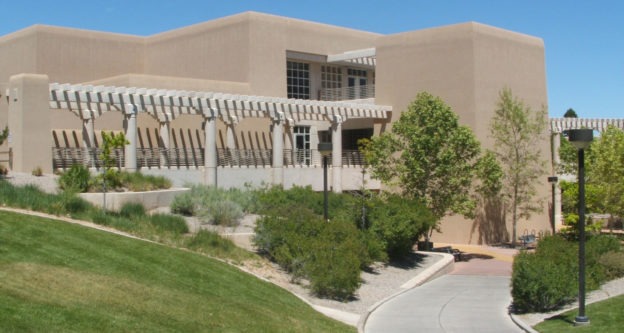
I attended the 24th Annual Meeting of Human Behavior and Evolution Society (HBES) in Albuquerque, New Mexico. I presented a poster with further results from my model of the coevolution of brains and culture. The model is a plausible explanation for the expansion of the human brain size during the Pleistocene.

I attended the 13th Annual Meeting of The Society for Personality and Social Psychology (SPSP) in San Diego, California. I presented a poster at the Evolutionary Preconference with preliminary results from my model of the coevolution of brains and culture. The model is a plausible explanation for the expansion of the human brain size during the Pleistocene.