Featured post

Upcoming

April 30 – May 1, 2025: Invited speaker at the Behavioural Exchange Conference, Behavioral Science Group at the Office of Development Affairs, Abu Dhabi, UAE

January 15, 2025: Invited talk at the Centre for Culture and Evolution, Brunel University, London

December 3, 2024: Invited talk at Google

October 18, 2024: Invited talk at Department of Economics, Stellenbosch University, South

October 3-8, 2024: Keynote speaker at Khazanah Megatrends Forum, Khazanah Nasional Berhad (Malaysian Sovereign Wealth Fund), MalaysiaAfrica

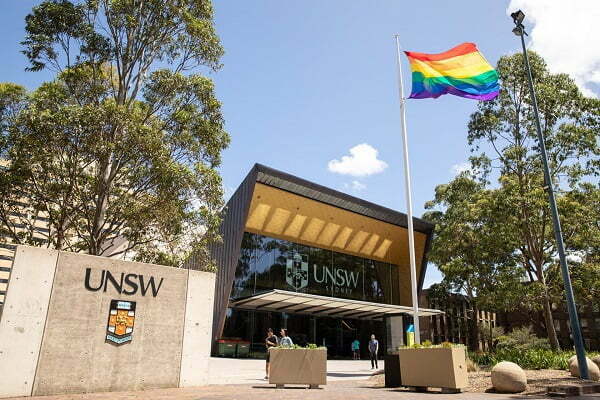
September 25, 2024: Invited speaker at the 2024 Wallace Wurth Lecture, University of New South Whales, Sydney, Australia

June 3-4, 2024: Cohesive Capitalism Summit, London School of Economics

April 11-12, 2024: Invited speaker at workshop on “An Aspirational Approach to Planetary Futures” by the UNDP Human Development Report Office, Oxford

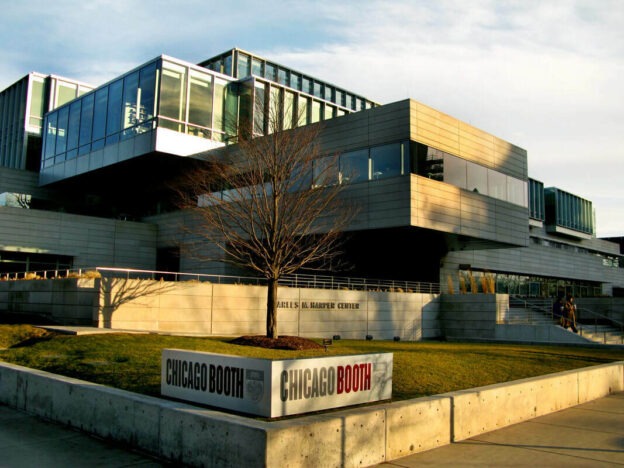
April 8, 2024: Invited speaker at Booth School of Business, The University of Chicago.

March 9-11, 2024: Meeting on Comity, London School of Economics

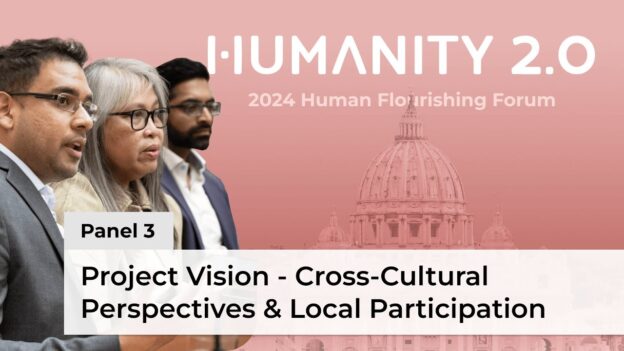
Invited guest at Human Flourishing Forum at Pontifical Academy of Sciences, Vatican

I had the honor of being invited to speak at the Human Flourishing Forum at Pontifical Academy of Sciences.

My talk explored the intersection of AI, cultural understanding, and human flourishing, emphasizing how technology should enhance human innovation rather than drive it. I discussed the challenges in measuring flourishing across diverse cultures and the importance of moving beyond Western-centric models of success.

My sincere thanks to Tim Lomas for chairing the panel, and speakers Mila Aliana, Brandon Vaidyanathan, Victor Counted, Monica Aleman, and Tomas Björkman for their insightful perspectives.

My talk can be found here, and the full discussion can be found here.

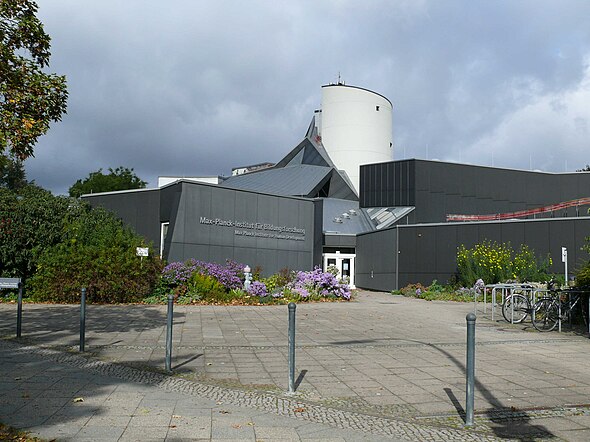
Invited talk at Center for Humans and Machines, Max Planck Institute of Human Development, Berlin, Germany

I recently gave an invited talk at the Center for Humans and Machines at the Max Planck Institute of Human Development in Berlin, Germany.

My presentation focused on the limitations of relying on WEIRD samples in research on human cognition and behavior, and the need to move beyond these populations. I shared new data from my research in Namibia and Angola, drawing on the framework from my book, A Theory of Everyone, to emphasize the importance of strategic sampling based on theory and cultural distance.

In the talk, I also discussed best practices for cross-cultural research, including the use of online tools like Besample, cross-cultural collaborations, and considerations for field research.

My deepest thanks to the Max Planck Institute of Human Development for inviting me and organising the event.

Some of my relevant papers on the topic can be found here:

  • Muthukrishna, M. (2023). [BOOK] A Theory of Everyone: Who we are, how we got here, and where we’re going. MIT Press (US & Canada) / Basic Books (UK and Commonwealth) [Amazon and Local Bookstores]
  • Muthukrishna, M., Bell, A. V., Henrich, J., Curtin, C., Gedranovich, A., McInerney, J. & Thue, B. (2020). Beyond Western, Educated, Industrial, Rich, and Democratic (WEIRD) Psychology: Measuring and Mapping Scales of Cultural and Psychological Distance. Psychological Science, 31(6), 678-701. [Download] [Supplementary] [Code] [Summary Post] [Publisher] [Twitter]
  • Slingerland, E., Atkinson, Q. D., Ember, C. R., Sheehan, O., Muthukrishna, M., Bulbulia, J. & Gray, R. D. (2020). Coding Culture: Challenges and Recommendations for Comparative Cultural Databases. Evolutionary Human Sciences, 2, E29. [Download] [Publisher]

Keynote at Association for Contextual Behavioral Science World Conference, Buenos Aires, Argentina

I was honored to deliver a keynote at the Association for Contextual Behavioral Science (ACBS) World Conference 2024 in Buenos Aires, Argentina.

In my presentation, based on the concepts from my book, A Theory of Everyone, I discussed the ongoing scientific revolution transforming the psychological and behavioral sciences. I also discussed how the dual inheritance theory provides a comprehensive framework for understanding human behavior and its applications in real-world interventions and policy.

My deepest thanks to the ACBS for inviting me and organising the event, and to Lori E. Crosby, Mavis Tsai and her team for their insightful talks and workshop.

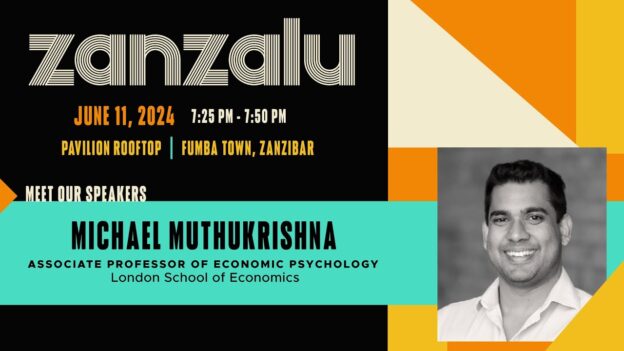
Invited speaker for Charter Cities Week Zanzalu, Zanzibar

I was invited to talk at the Charter Cities Week in Fumba Town, Zanzibar.

I explored the themes from my book, A Theory of Everyone, focusing on how startup cities like Fumba Town can catalyze economic and social development. I discussed the critical interplay of culture, psychology, and economics in shaping urban projects, emphasizing the role of cultural and psychological insights as foundational elements in designing and building new urban environments.

The full talk can be found here, and you can check out my book here.

My sincere thanks to the Charter Cities Institute for inviting me and hosting the event.

Invited speaker at Global Solutions Summit, The World Policy Forum to the G20 and G7.

This month, I was invited to deliver a keynote at the Global Solutions Summit by the World Policy Forum to the G20 and G7, on “Paradigm Shift: Reorienting Economics and Economic Policy ⁠Solution Dialogues”.

My talk focused on rethinking economic frameworks for the G20 nations, highlighting the need for a new paradigm that addresses global challenges like inequality and political instability.

My sincere thanks to David Sloan Wilson for moderating the panel, and to fellow speakers Karla Hoff, Guru Madhavan, and Tania Singer for their insightful contributions.

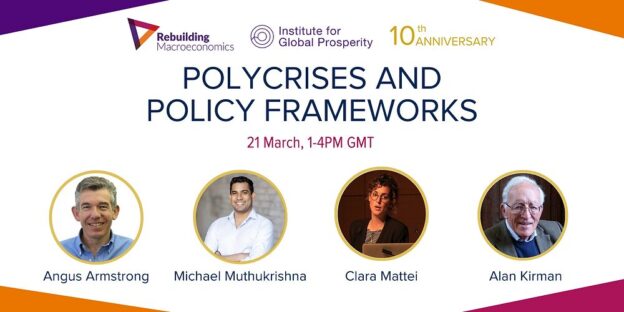
Keynote speaker at Rebuilding Macroeconomics conference on Polycrises and Policy Frameworks

I was invited to deliver a keynote address at the Rebuilding Macroeconomics conference on Polycrises and Policy Frameworks. In my talk, I explored how human evolution, shaped by both genetic and cultural factors, has contributed to our ability to address complex challenges. I focused on my research on cultural transmission, and how it enables humans to innovate, cooperate, and respond to crises.

I also tackle these concepts in my book, A Theory of Everyone, which you can check out here.

The talk also included an insightful discussion between myself, speakers Clara Mattei and Alan Kirman. Those interested can view the full discussion here.

My deepest thanks to the Insitute for Global Prosperity for inviting me and for organizing the event.

Keynote speaker and panelist at SPSP Computational Psychology Preconference in San Diego

I had the pleasure of delivering the keynote at the SPSP Computational Psychology Preconference in San Diego.

My talk on Data-Driven Discovery, focused on how to conduct research using existing datasets. I discussed strategies for finding and analyzing datasets effectively, emphasizing the potential of computational methods to uncover new insights in psychology through large-scale data analysis.

I also participated as a panelist at the conference. In the roundtable, we addressed equitable collaborations and the inclusion of researchers from the Global South in social psychology. The session included discussions on barriers, opportunities, and methodologies relevant to fostering global research.

My thanks to Arathy Puthillam for chairing the event, to the SPSP organizers for the opportunity, and to everyone who attended for their engaging questions and discussions.

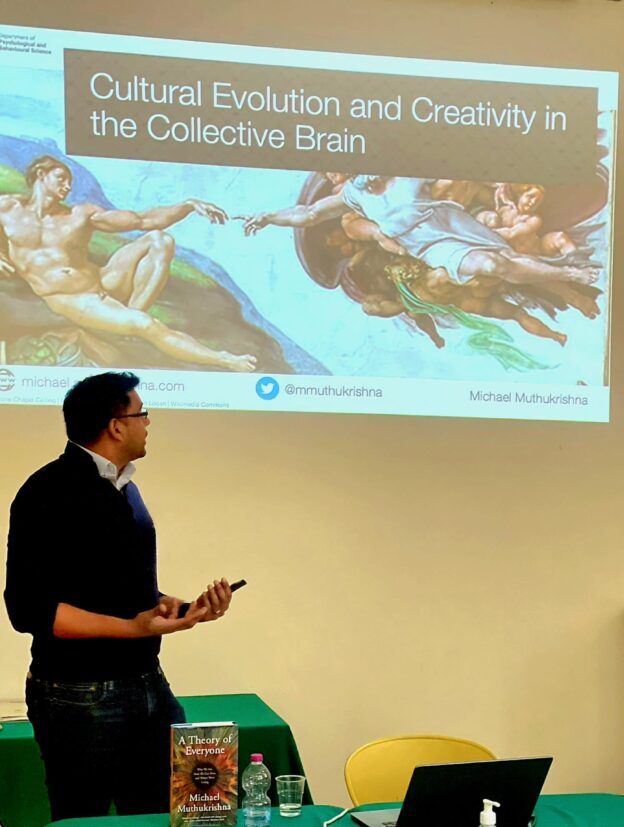
Invited speaker at Creativity: Innovation, Transmission and Motivation in Animals, Humans and Societies Meeting, Pontifical University of the Holy Cross, Rome, Vatican

I was delighted to be an invited speaker at the meeting on “Creativity: innovation, transmission, and motivation in animals, humans, and societies,” which took place at the Pontifical University of the Holy Cross in Rome. The meeting is part of an effort to strengthen the relationship between the Vatican and science.

I presented my research on “Cultural Evolution and Creativity in the Collective Brain”, including new work, my book, A Theory of Everyone, and previous work in these papers:

This event brought together an interdisciplinary array of scholars, priests, and researchers, and I am looking forward to continuing this important dialogue.

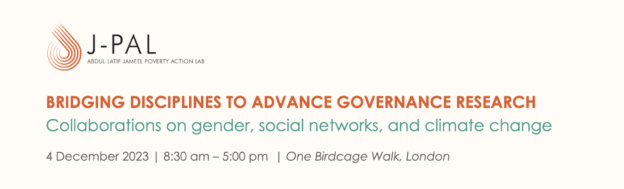
Panelist and Invited Speaker on Bridging Disciplines to Advance Governance Research at the Governance Initiative, Abdul Latif Jameel Poverty Action Lab, London

I recently participated as a panelist and invited speaker at the Governance Initiative organized by the Abdul Latif Jameel Poverty Action Lab in London, UK, at their conference on “Bridging Disciplines to Advance Governance Research: Collaborations on Gender, Social Networks, and Climate Change.”

I was a panelist on the “Perspectives on The Challenges and Importance of Multidisciplinary Collaboration in Governance Research,” alongside Nava Ashraf and Noam Yuchtman. This engagement provided a forum to discuss innovative strategies for governance and poverty alleviation, leveraging insights from cultural evolution and economic psychology to inform policy and action.

I tackle more of this in my book, “A Theory of Everyone,” and other relevant papers on the topic can be found here:

  • Schimmelpfennig, R. & Muthukrishna, M.  (2023). Cultural Evolutionary Behavioural Science in Public Policy. Behavioural Public Policy. [Awarded EUSPR Presidential Award 2023] [Publisher] [Download] [Twitter] [LinkedIn]
  • Muthukrishna, M., Bell, A. V., Henrich, J., Curtin, C., Gedranovich, A., McInerney, J. & Thue, B. (2020). Beyond Western, Educated, Industrial, Rich, and Democratic (WEIRD) Psychology: Measuring and Mapping Scales of Cultural and Psychological Distance. Psychological Science, 31(6), 678-701. [Download] [Supplementary] [Code] [Summary Post] [Publisher] [Twitter]

My thanks to the Abdul Latif Jameel Poverty Action Lab for organizing the event, and my co-panelists, Nava Ashraf and Noam Yuchtman for an engaging session.

Keynote speaker at Risk Management Symposium 2023, Saïd Business School, Oxford

Last week, I was honored to serve as the keynote speaker at the Risk Management Symposium 2023, held at Saïd Business School, Oxford.

The event gathered experts to explore advancements in risk management, and my presentation delved into how cultural evolution and economic psychology inform risk management practices in today’s complex world. I focused on my research on overconfidence, diversity, and innovation.

I also tackle these concepts in my book, “A Theory of Everyone” which you can check out here.

Many thanks to Tim Jenkinson, John Renkema and Saïd Business School for organising and hosting the event.

Invited speaker at University of Michigan

I was invited to speak at the University of Michigan‘s RCGD Fall Seminar Series, co-sponsored by the Institute for Social Research and Department of Psychology. I presented my book, A Theory of Everyone, focusing on the theory, historical psychology, and cross-cultural differences in cognition.

My thanks to Shinobu Kitayama for inviting me and to University of Michigan for organizing the event.

Invited Speaker at the Kinship, Historical Psychology and European Medieval Development Workshop, Harvard University

I was invited to a workshop at Harvard on “Kinship, Historical Psychology and European Medieval Development“. I presented on the “Database of Religious History,” and its use in historical psychology.

More about the workshop and projects can be found on the Historical Psychology Project website. This paper launched the field:

Muthukrishna, M., Henrich, J. & Slingerland, E. (2021). Psychology as a Historical Science. Annual Review ofPsychology, 72, 717-49. [Download] [Publisher] [Summary Post] [Twitter]

My thanks to Jonathan Schulz and Joe Henrich for organizing the workshop.

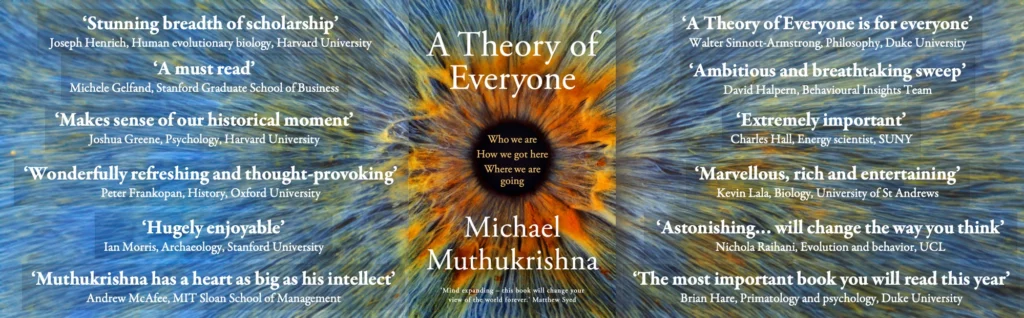
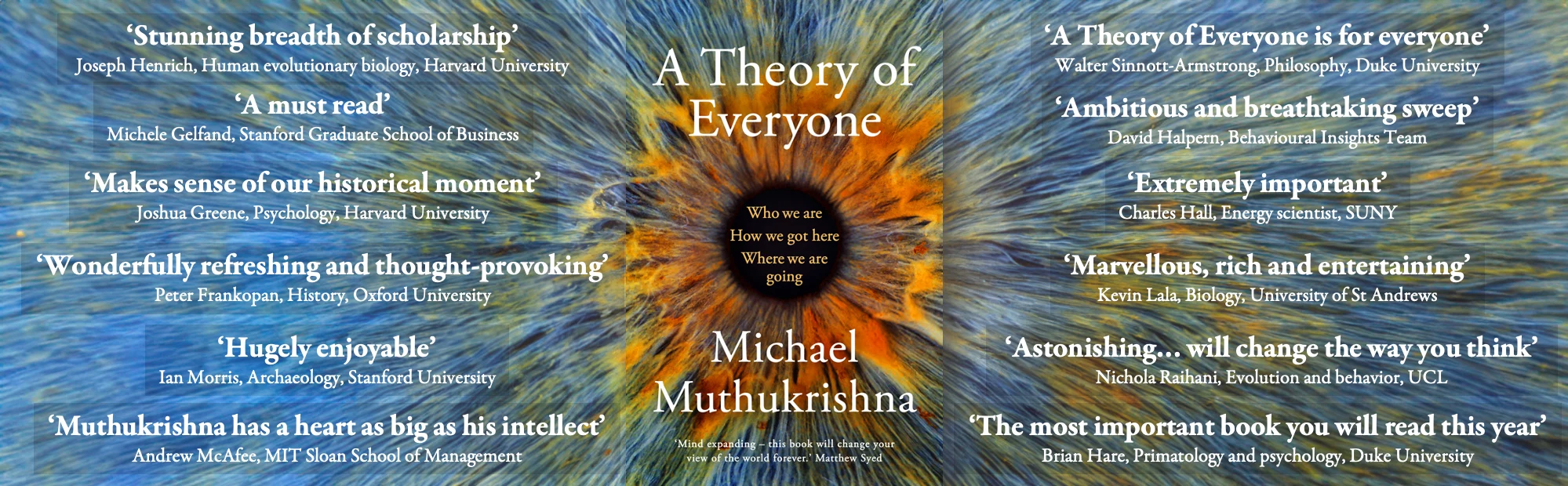
Book Launch: A Theory of Everyone: Who We Are, How We Got Here and Where We’re Going

I launched my book, “A Theory of Everyone: Who We Are, How We Got Here, and Where We’re Going,” at the LSE. The launch was a fireside chat with author, journalist, and Olympian Matthew Syed, chaired by our Head of Department, Liam Delaney. I was thrilled that the room was overflowing with thousands watching online. You can watch the launch below:

Invited Speaker at WEIRD Conference, University of Minnesota Law School, University of Minnesota.

The University of Minnesota Law School hosted a WEIRD Conference. Joe Henrich opened the conference with a discussion of his book (which the conference was built around) and I ended the conference with a talk on my book, A Theory of Everyone. It was a US soft launch for the book – the official launch was at LSE and you can watch the video below:

My thanks to Claire Hill for organizing the event and inviting me to talk about A Theory of Everyone.

Invited speaker at Emotion in History: Boundary Crossing Adventures Workshop, University of California, Santa Barbara, CA.

I gave a talk at the “Emotions in History: Boundary-Crossing Adventures” workshop, hosted by the University of California, Santa Barbara (UCSB). This symposium brought together experts from the fields of psychology and history to explore the interplay between emotional theories across these disciplines.

The talk also included a wonderful roundtable discussion.

For those interested, you can watch the recordings of this event, accessible here. My deepest thanks to UCSB and the organizers, Hongbo Yu and Ya Zuo.

What makes us smart?

Summary from Twitter thread:

New paper on “What makes us smart?“.

Unpacked in my soon-to-be-released book, “A Theory of Everyone“.

Here’s the take home: Studying hardware won’t help you understand the capabilities of pivot tables in Excel nor Code Interpreter in ChatGPT.


Your head is filled with entire analogies, metaphors, epistemologies, and tools that you once learned and now effortlessly use for thinking. It’s how you cook, how you count, and why you think invisible germs are a good explanation for disease. But invisible spirits are not.

Studying our genes and neural hardware won’t help you understand human intelligence. Our cultural software endows us with *new* cognitive capabilities.

How does this software get written? How do we become more brilliant, creative, and improve our education systems?

Consider how we count. We went from counting 1, 2, 3, many, as some small-scale societies still count, to a full-blown number system. Numbers likely emerged as an innovation for more efficiently tracking cattle and crops – you need to know who owes you what!

This new cognitive capability used a metaphor – fingers. But there’s nothing unique about fingers & 10 is awkward (16 would be better). Cultures have counted on body parts from base 6 to 27. But to count beyond body parts, we needed a different metaphor. Something like stones.


‘Calculus’ comes from ‘pebble’ (think calcium or limestone), and was used for addition and subtraction. Stones let you think about addition or subtraction beyond how creative you can get with body parts. There are some stones, and you can throw down more or snatch some away.

Stones are great for natural numbers: 1, 2, 3, 4, 5, etc. But stones don’t make zero obvious. What does zero pebbles look like? It looks a lot like zero of everything else – it’s nothing – and ‘nothing’ is hard to imagine. Zero came a lot later. What about negatives?

The number line as a metaphor helped make zero more concrete and easily transmissible even to children. Number lines work by mapping numbers not to objects but to movement and position, but they also revealed the negative numbers, which are not otherwise intuitive!

File:Number-line.svg - Wikimedia Commons


“Negative numbers darken the very whole doctrines of the equations and make dark of the things which are in their nature excessively obvious and simple” as Francis Maseres complained in the 18th century.


Nothing about numbers is intuitive to our ape brains. But these metaphors, mental models, and cultural innovations – cultural software – literally changed our minds and gave us new capacities. They’re like software upgrades.

These kids have a Soroban abacus in their heads allowing them to swiftly add large sums: 3267 + 9853 + 6531 + 7991 + 2641 in seconds. It’s a brand new cognitive capability. New cultural software. Video here: https://twitter.com/mmuthukrishna/status/1684576156803289091?s=20

Some innovations are more general than others. For example, thanks to the invention of writing, I can convey information through straight and squiggly lines on a page. I’m doing it right now and I’m literally changing your brain.

Another lesson: Mental tools can go out of date. Mental math became less useful. My middle school teacher, warned us about not being able to +, -, x, / without a calculator (because we wouldn’t be carrying calculators in our pocket). He didn’t foresee the arrival of the iPhone.

Much of what we assume are human capabilities are actually cultural software, invented and transmitted. This can be hard to see because we all live in a bubble. Academics in Ivory Towers, coastal elites, rural small towns – all part of a big bubble.

Almost everyone you’ll ever meet went to school; can all read, write, & count; and consumes some form of television and online media.

Breaking out of this big bubble requires going back in time or to far-flung places.

History – the cultural fossil record – shows that we didn’t always have a number system. Anthropologists in far-flung sites get laughed at explaining germ theory: ‘This guy thinks there are invisible animals, “germs”, in the water!

If that seems crazy because we grew up in a world where people took germ theory for granted, remember that less than 150 years ago, doctors didn’t believe fewer mothers might die if they washed their hands between examining a dead body and delivering a baby.

If our cultural software is what makes us smart, it means that we can be deliberate in how it gets written. We can seek out new mental models, intellectually arbitrage our way to creativity & discovery, and revitalize our education systems.

If you liked this post and want to learn more about how cultural evolution can be applied to our lives, companies, and societies, please pre-order A Theory of Everyone: https://linktr.ee/theoryofeveryone. Pre-orders really help with the success of the book and Amazon pre-orders guarantee the lowest price. Thank you!

The Evolution of Comity: Ultimate Constraints on the Scale of Cooperation at the School of Collective Intelligence, Mohammed VI Polytechnic University

I gave an invited talk at the School of Collective Intelligence at Mohammed VI Polytechnic University in Morocco on the dynamics of collective intelligence within communities and its significance in driving innovation and addressing complex problems.

  • Muthukrishna, M. (2023). [BOOK] A Theory of Everyone: Who we are, how we got here, and where we’re going. MIT Press (US & Canada) / Basic Books (UK and Commonwealth) [Amazon and Local Bookstores]
  • Schnell, E., Schimmelpfennig, R., & Muthukrishna, M. (2023). The Size of the Stag Determines the Level of Cooperation. bioRxiv
  • Muthukrishna, M., Henrich, J. & Slingerland, E. (2021). Psychology as a Historical Science. Annual Review of Psychology, 72, 717-49. [Download] [Publisher] [Twitter]
  • Henrich, J. & Muthukrishna, M. (2021). The Origins and Psychology of Human Cooperation. Annual Review of Psychology, 72, 207-40. [Download] [Publisher] [Twitter]

The title of my talk was “The Evolution of Comity: Ultimate Constraints on the Scale of Cooperation.” Key publications relevant to this discussion are:

The research is related to my book, and a grant focused on expanding our comprehension of the foundational processes facilitating cooperation, with the goal of enhancing social harmony and unity. I am grateful to the faculty, students and staff at Mohammed VI Polytechnic University for the invitation and their hospitality.

Mapping Psychological Terrae Incognita: Explorations Beyond WEIRD Psychology at APS International Convention of Psychological Science (ICPS) 2023

I was a symposium speaker at “East, West, and the Rest: Exploring Psychological Variation across the Globe”, Association for Psychological Science‘s (APS) International Convention of Psychological Science (ICPS) 2023, held at Brussels, Belgium. The symposium was chaired by Shinobu Kitayama and also included Catherine Thomas and Ayse Uskul.

I spoke about “Mapping Psychological Terrae Incognita: Explorations Beyond WEIRD Psychology”, which primarily focused on these papers:

  1. Muthukrishna, M., Bell, A. V., Henrich, J., Curtin, C., Gedranovich, A., McInerney, J. & Thue, B. (2020). Beyond Western, Educated, Industrial, Rich, and Democratic (WEIRD) Psychology: Measuring and Mapping Scales of Cultural and Psychological Distance. Psychological Science, 31(6), 678-701. [Download] [Supplementary] [Code] [Summary Post] [Publisher] [Twitter]
  2. White, C. J. M., Muthukrishna, M. (equal senior) & Norenzayan, A. (2021). Worldwide evidence of cultural similarity among co-religionists within and across countries using the World Values Survey. Proceedings of the National Academy of Sciences, 118 (37) e2109650118. [Download] [Supplementary] [Publisher] [Twitter]
  3. Muthukrishna, M., Henrich, J. & Slingerland, E. (2021). Psychology as a Historical Science. Annual Review of Psychology, 72, 717-49. [Download] [Publisher] [Summary Post] [Twitter]