


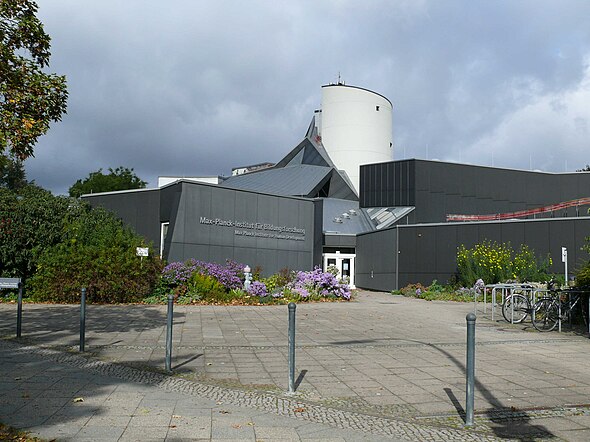
I recently gave an invited talk at the Center for Humans and Machines at the Max Planck Institute of Human Development in Berlin, Germany.
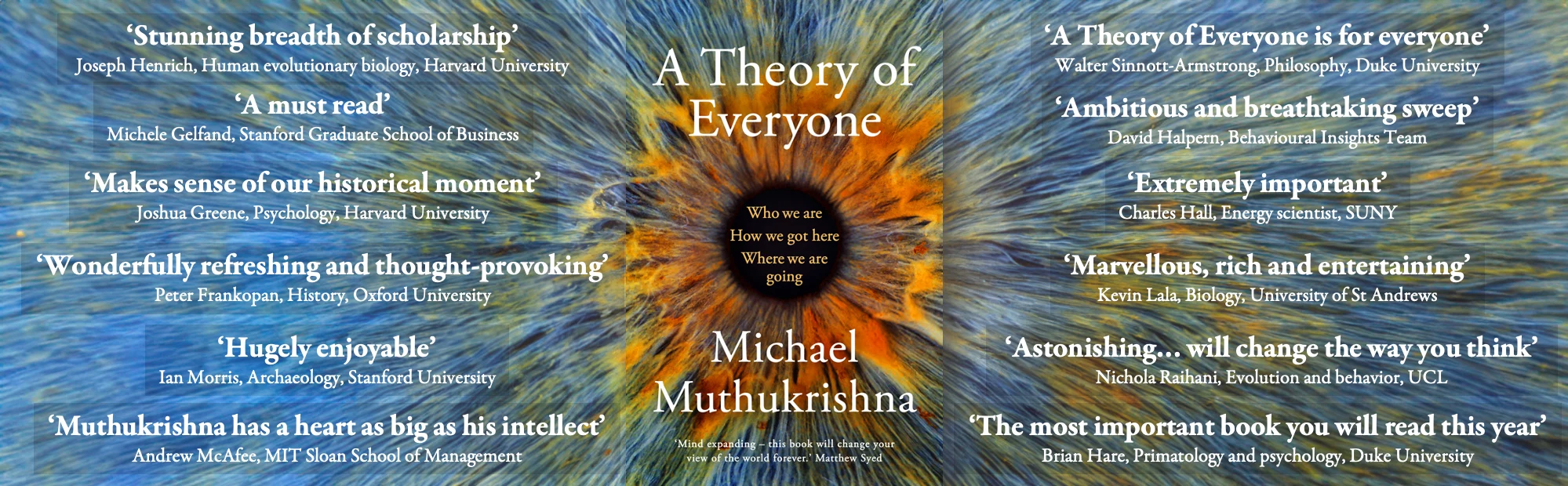
My presentation focused on the limitations of relying on WEIRD samples in research on human cognition and behavior, and the need to move beyond these populations. I shared new data from my research in Namibia and Angola, drawing on the framework from my book, A Theory of Everyone, to emphasize the importance of strategic sampling based on theory and cultural distance.
In the talk, I also discussed best practices for cross-cultural research, including the use of online tools like Besample, cross-cultural collaborations, and considerations for field research.
My deepest thanks to the Max Planck Institute of Human Development for inviting me and organising the event.
Some of my relevant papers on the topic can be found here:
- Muthukrishna, M. (2023). [BOOK] A Theory of Everyone: Who we are, how we got here, and where we’re going. MIT Press (US & Canada) / Basic Books (UK and Commonwealth) [Amazon and Local Bookstores]
- Muthukrishna, M., Bell, A. V., Henrich, J., Curtin, C., Gedranovich, A., McInerney, J. & Thue, B. (2020). Beyond Western, Educated, Industrial, Rich, and Democratic (WEIRD) Psychology: Measuring and Mapping Scales of Cultural and Psychological Distance. Psychological Science, 31(6), 678-701. [Download] [Supplementary] [Code] [Summary Post] [Publisher] [Twitter]
- Slingerland, E., Atkinson, Q. D., Ember, C. R., Sheehan, O., Muthukrishna, M., Bulbulia, J. & Gray, R. D. (2020). Coding Culture: Challenges and Recommendations for Comparative Cultural Databases. Evolutionary Human Sciences, 2, E29. [Download] [Publisher]